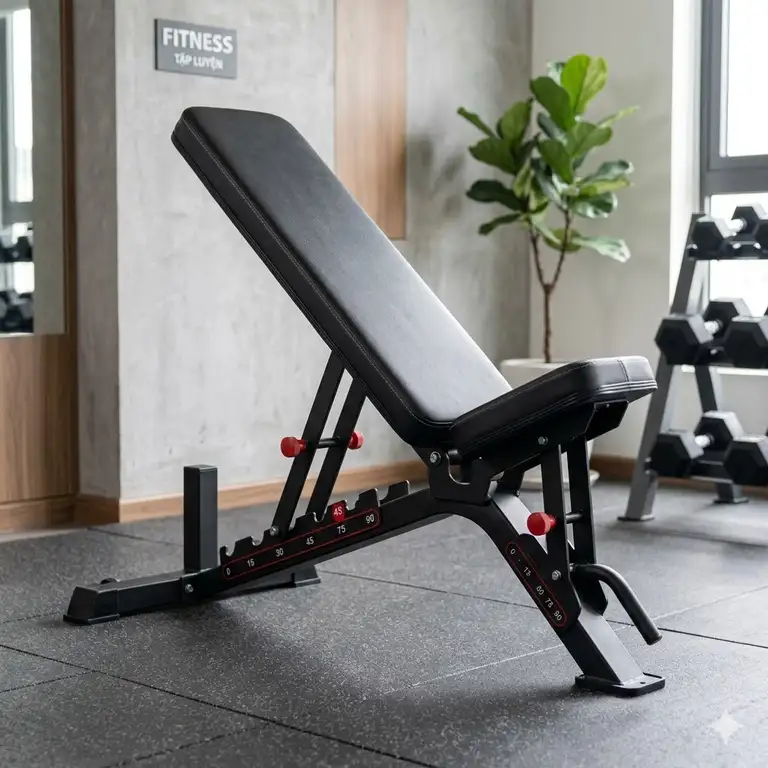
An incline adjustable bench is essentially the MVP of any serious home gym setup. Whether you are aiming to sculpt a more defined upper chest or simply need a stable platform for seated dumbbell presses, the versatility of a high-quality bench cannot be overstated. In 2026, the market has shifted away from the clunky, rattle-prone equipment of the past toward precision-engineered tools that feel as solid as what you’d find in a professional training center.
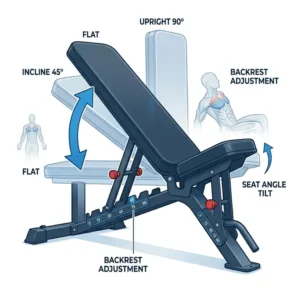
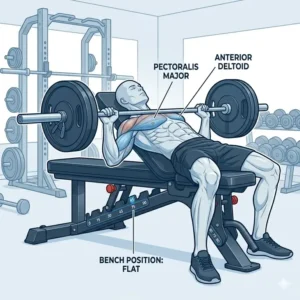
What is an incline adjustable bench? It is a piece of weightlifting equipment designed with a backrest that can be adjusted to various angles, typically ranging from flat to a nearly 90-degree upright position. This flexibility allows users to target specific muscle groups more effectively than a standard flat bench. According to the National Strength and Conditioning Association, altering the angle of a bench press can significantly shift the activation between the clavicular and sternal heads of the pectoralis major.
As we move deeper into 2026, I have noticed a massive trend toward “smart” integration and space-saving designs. However, the core requirements remain the same: stability, ease of adjustment, and comfort. If your bench wobbles when you’re holding 50-pound dumbbells over your face, it doesn’t matter how many Bluetooth features it has—it’s a bad bench. In this guide, I will break down the top contenders this year, providing the kind of deep-dive analysis you won’t find on a basic product page.
Quick Comparison: Top 2026 incline adjustable bench Models
| Product Name | Weight Capacity | Adjustment Positions | Best For | Price Range |
| FLYBIRD Heavy Duty Bench | 800 lbs | 7 Back, 3 Seat | Apartment Dwellers | Around $140-$170 |
| REP AB-3000 2.0 | 1,000 lbs | 8 Back, 5 Seat | Dedicated Home Gyms | $300-$350 range |
| Rogue Adjustable Bench 3.0 | 1,000 lbs+ | 10 Back, 3 Seat | Lifetime Durability | Around $600 |
| Bowflex 5.1S Bench | 600 lbs | 6 Positions | Easy Storage | $250-$300 range |
| RitFit Foldable Bench | 800 lbs | 6 Back, 4 Seat | Budget-Conscious | Under $150 |
Expert Analysis: Looking at the data above, the REP AB-3000 2.0 strikes the most balanced chord for the average enthusiast, offering a massive 1,000-lb capacity that guarantees stability during heavy lifts. While the FLYBIRD is slightly lighter in capacity, its foldable nature makes it the clear winner for those working in tight urban spaces. Budget buyers should note that the RitFit provides surprisingly high adjustment variety, though it lacks the “tank-like” feel of the Rogue or REP models.
💬 Just one click — help others make better buying decisions too!😊
[addtoany]
Top 5 incline adjustable bench Models: Expert Analysis
1. FLYBIRD Heavy Duty Foldable Bench (2026 Edition)
The FLYBIRD Heavy Duty Bench has become a household name for a reason: it solves the “I have no room for a gym” problem without feeling like a toy.
-
Key Specs: 800-lb weight capacity with 7 backrest positions and 3 seat positions.
-
Real-World Meaning: An 800-lb limit is plenty for 95% of lifters. It means that even if you weigh 250 lbs and are benching 300, the frame remains well within its safety margin, preventing the “flex” that often scares people on cheaper benches.
-
Expert Opinion: I recommend this for the “garage-gym-lite” crowd. What most buyers overlook is the triangle support structure; it’s mechanically superior for weight distribution. If you’re a pro powerlifter, you might want more mass, but for general fitness, this is a gem.
-
Customer Feedback: Users consistently praise the “out of the box” readiness, noting it takes less than five minutes to set up.
-
Pros: * Folds down to almost nothing (great for under-bed storage).
-
Fast-bolt adjustment system is very intuitive.
-
High-density foam padding doesn’t bottom out easily.
-
-
Cons:
-
Footprint is a bit narrow for very tall users.
-
Padding gap can be annoying during flat presses.
-
-
Price Range: $140-$170. Value Verdict: The best ROI for space-constrained apartments.
2. REP Fitness AB-3000 2.0 FID Bench
When it comes to the REP Fitness AB-3000 2.0, we are talking about a serious piece of steel that bridges the gap between home use and commercial grade.
-
Key Specs: 1,000-lb rated capacity with a 14-gauge steel frame and 2.5-inch thick pads.
-
Real-World Meaning: The 14-gauge steel provides a dampened feel; it absorbs the shock of re-racking heavy weights. The 2.5-inch pads mean your shoulders are protected during maximum effort sets.
-
Expert Opinion: This is my “Goldilocks” pick. The inclusion of a decline setting (the ‘D’ in FID) makes it more versatile than 90% of the competition. If you’re serious about chest development, that decline angle is crucial for lower pec activation.
-
Customer Feedback: Reviewers love the “ladder style” adjustment, which is much faster than pull-pins during supersets.
-
Pros: * Rock-solid stability with no side-to-side play.
-
Integrated wheels make moving this heavy beast easy.
-
Clean, professional aesthetics.
-
-
Cons:
-
It’s heavy (nearly 90 lbs), so don’t plan on carrying it upstairs daily.
-
The vinyl can be a bit slippery if you sweat heavily.
-
-
Price Range: $300-$350. Value Verdict: High-end performance for a mid-range price.
3. Rogue Adjustable Bench 3.0
The Rogue Adjustable Bench 3.0 is the benchmark by which all other incline adjustable bench models are measured. It’s overbuilt in the best way possible.
-
Key Specs: 3×3-inch 11-gauge steel construction with a bolt-together design.
-
Real-World Meaning: 11-gauge steel is the industry standard for NFL and NCAA weight rooms. This bench is essentially “bomb-proof.” You could drop a car on this (please don’t) and the frame would likely survive.
-
Expert Opinion: You buy a Rogue bench once and give it to your grandkids. What the spec sheet won’t tell you is how high-quality the textured “grabber” vinyl is. It locks your back in place so you don’t slide during a heavy leg drive.
-
Customer Feedback: Most users mention the “zero-gap” feel even though it has a two-piece pad.
-
Pros: * American-made craftsmanship.
-
Virtually zero wobble at any angle.
-
Minimal pad gap (only about 1 inch).
-
-
Cons:
-
Expensive shipping costs due to weight.
-
A bit overkill for casual fitness enthusiasts.
-
-
Price Range: Around $600. Value Verdict: A “buy it for life” investment for the dedicated athlete.
4. Bowflex 5.1S Stowable Bench
The Bowflex 5.1S Bench focuses on the user experience and sleek design, making it a favorite for modern home interiors.
-
Key Specs: 600-lb load capacity with a unique “stand-up” storage feature.
-
Real-World Meaning: While the 600-lb limit is lower than Rogue, it’s intentionally designed for the “PowerBlock” or adjustable dumbbell user. The stand-up feature reduces the floor footprint by 50% when not in use.
-
Expert Opinion: This is the “user-friendly” choice. The adjustment knob is buttery smooth. However, I’ve noticed the seat height is slightly taller than competition standards, which might be a struggle for lifters under 5’6″ to get their feet flat on the floor.
-
Customer Feedback: Users rave about the look and how easy it is to tuck into a corner of the living room.
-
Pros: * Space-saving vertical storage is best-in-class.
-
Very comfortable, contoured padding.
-
Includes a removable leg hold-down for decline work.
-
-
Cons:
-
Lower weight capacity than rivals.
-
Slightly higher seat height.
-
-
Price Range: $250-$300. Value Verdict: Perfect for the aesthetic-conscious home gym owner.
5. RitFit Adjustable Foldable Weight Bench
The RitFit Foldable Bench is the ultimate entry-point for anyone starting their fitness journey in 2026.
-
Key Specs: 800-lb capacity and 36 possible adjustment combinations.
-
Real-World Meaning: Having 36 combinations allows for very granular control over your lifting mechanics. You can find the exact “sweet spot” for your shoulder mobility that a 5-position bench simply can’t offer.
-
Expert Opinion: Don’t let the lower price fool you; the welds are surprisingly clean. It’s a “no-frills” workhorse. I recommend this for beginners who aren’t yet sure if they’ll stick with a home routine and don’t want to drop $500 today.
-
Customer Feedback: Many buyers are surprised by the thickness of the steel relative to the price.
-
Pros: * Extremely affordable.
-
Highly adjustable seat and backrest.
-
Comes with basic resistance bands for accessory work.
-
-
Cons:
-
The “faux-leather” vinyl is thinner and prone to tearing over years of use.
-
Adjustment pins are a bit fiddly compared to ladder systems.
-
-
Price Range: Under $150. Value Verdict: Unbeatable entry-level value.
✨ Don’t Miss These Exclusive Deals!
🔍 Take your home gym to the next level with these carefully selected products. Click on any highlighted item to check current pricing and availability. These tools will help you create authentic results your family will love!
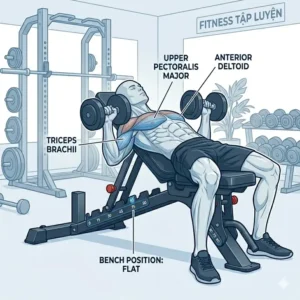
Practical Usage Guide: Maximizing Your incline adjustable bench
Setting up your incline adjustable bench correctly is the difference between a productive workout and a trip to the physical therapist. In my experience, most people take their bench out of the box, tighten the bolts “well enough,” and start lifting. This is a mistake.
Step-by-Step Optimization
-
The Floor Test: Place your bench where you intend to use it. If your garage floor is sloped (most are for drainage), your bench will rock. Use shims or move it to a level spot. A 1-degree tilt at the base becomes a significant imbalance at the top of a press.
-
The Bolt Torque: After the first 30 days of use, go back and re-tighten every bolt. The vibrations from dropping weights and shifting body weight will inevitably loosen the factory-tightened nuts.
-
Vinyl Care: Sweat is acidic. Over time, it will dry out the vinyl and cause cracking. Use a simple solution of mild soap and water—avoid harsh chemicals like bleach, which will destroy the material’s elasticity in months.
Common Pitfalls to Avoid
Many lifters forget to adjust the seat angle when they adjust the back angle. If you are doing an incline press at 45 degrees but leave the seat flat, you will naturally slide off the bench. Always tilt the seat up one notch to “cradle” your pelvis and keep your spine neutral.
Problem → Solution Guide: Tackling Bench Woes
Even the best incline adjustable bench can have quirks. Here is how to solve the most common issues reported by users in 2026.
| The Problem | The Practical Solution |
| The “Pad Gap” Discomfort | During flat presses, the gap between the seat and backrest can dig into your lower back. Solution: Roll up a thin yoga mat or towel and place it in the gap. Alternatively, look for “zero-gap” benches like the REP AB-5000. |
| Slippery Vinyl | You can’t get a good “leg drive” if your shoulders are sliding up the bench. Solution: Use “shelf liner” (the rubbery mesh stuff) or a specialized bench cover to add friction. |
| Squeaking Hinges | Metal-on-metal noise can be distracting. Solution: Apply a small amount of white lithium grease to the pivot bolts. Avoid WD-40 as it is a solvent, not a long-term lubricant. |
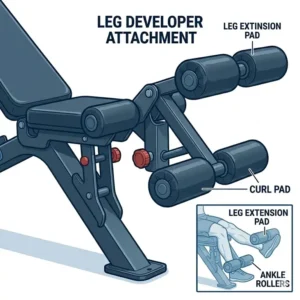
How to Choose an incline adjustable bench: The 2026 Checklist
Choosing the right bench isn’t just about the price tag; it’s about matching the equipment to your specific physiology and goals. If you are 6’4″, a compact foldable bench will leave your head hanging off the end—an uncomfortable and potentially dangerous situation.
-
Steel Gauge Matters: Look for at least 14-gauge steel for hobbyists and 11-gauge for serious lifters. The lower the number, the thicker the steel.
-
The Footprint: Measure your space. An incline adjustable bench with a wide tripod base is more stable, but it’s a “toe-stubber” in small rooms.
-
Pad Width: Standard pads are 10-12 inches wide. If you have broad shoulders, aim for 12 inches to prevent your scapulae from hanging off the sides, which can cause shoulder impingement over time.
-
Adjustment Style: Ladder systems (where the support bar drops into a slot) are faster and more secure than pull-pins, which can occasionally fail to seat properly.
Common Mistakes When Buying an incline adjustable bench
One of the biggest errors I see is buyers prioritizing “maximum weight capacity” over “minimum height.” In the fitness world, there is a standard called IPF (International Powerlifting Federation) height, which is roughly 17 inches from the floor to the top of the pad.
Many imported benches are 19 or 20 inches tall. If you are not a giant, this height prevents you from getting your feet flat on the ground. Without your feet on the ground, you lose the “leg drive” necessary for a powerful and safe bench press. You end up arching your back in ways that put immense pressure on your lumbar spine.
Another mistake is ignoring the decline feature. While the keyword is incline adjustable bench, many modern models are actually FID (Flat, Incline, Decline). Even if you don’t do decline presses, the decline setting is fantastic for core work like declined sit-ups or leg raises. Don’t limit your future self by saving $20 today.
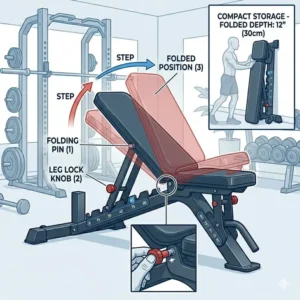
Incline adjustable bench vs. Flat Bench: Which Do You Need?
Is it worth spending the extra $100 for an adjustable model? In 90% of cases, yes. A flat bench is technically more stable because it has no moving parts, making it the choice for competitive powerlifters who only care about the flat press. However, for body composition and general health, the adjustable bench wins every time.
Think of it this way: A flat bench is a hammer. It does one thing perfectly. An incline adjustable bench is a multi-tool. You can perform incline presses for the upper chest, seated rows, chest-supported rows (which save your lower back), seated curls, and overhead presses. According to research published in the Journal of Strength and Conditioning Research, varying the angle of training is essential for avoiding plateaus and reducing repetitive stress injuries.
Long-Term Cost & Maintenance: The ROI of Quality
When you buy a budget incline adjustable bench for $90, you aren’t just paying for the bench; you’re paying for the eventual replacement. Cheap benches use “open-cell” foam that compresses permanently after a few months, leaving you sitting on the plywood base. They also use thin powder coating that chips, leading to rust in humid garages.
A mid-range bench ($300 range) usually features:
-
Closed-cell foam: Regains its shape after every set.
-
Zinc or chrome hardware: Resists corrosion.
-
Replaceable pads: If the vinyl rips, you can often buy just the pad rather than a whole new bench.
In the long run, spending $300 on a REP or Bowflex model is cheaper than buying three $100 benches over five years. Plus, the resale value of brand-name gym equipment in 2026 remains incredibly high—often 70% of the original price.
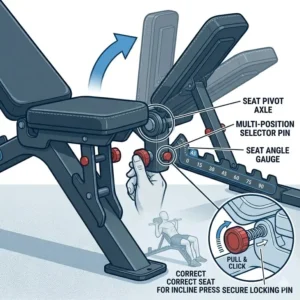
Safety & Regulations: What to Look For
In the U.S., there aren’t strict “regulations” for home gym equipment like there are for toys or cars, but there are industry standards. Look for equipment that mentions ASTM (American Society for Testing and Materials) guidelines.
A safe incline adjustable bench should have:
-
Rubber Feet: To prevent sliding on smooth gym flooring or concrete.
-
Locking Pins: Even ladder-style benches should have a way to “lock” the bench if you plan on moving it vertically.
-
Weight Rating Transparency: Does the manufacturer specify if the rating is for the user or the user + weights? Always assume the rating is the total combined weight. If you weigh 200 lbs and the bench is rated for 300 lbs, you can only safely lift 100 lbs. This is why I recommend benches with at least an 800-lb rating.
Features That Actually Matter (And Those That Don’t)
Marketing in 2026 is full of fluff. Here is how to filter the noise.
Matters: The “Gap” Management
As mentioned earlier, the gap between the seat and backrest is the biggest complaint in the industry. Benches that offer a “sliding” seat mechanism to close that gap when flat are worth every penny.
Matters: Transport Wheels
Unless your bench is permanently bolted to a lifting platform, you need wheels. A solid incline adjustable bench weighs 60-100 lbs. Dragging that across your floor will ruin your mats and your back.
Doesn’t Matter: Resistance Band Attachments
Many budget benches come with little D-rings for resistance bands. In my experience, these are flimsy and the bands provided are of poor quality. You are better off buying a solid bench and a separate set of high-quality loop bands.
Doesn’t Matter: “Smart” Rep Counters
Some 2026 models include digital screens to count reps. These are notoriously inaccurate and just one more thing that requires batteries or can break when you accidentally drop a dumbbell on them. Stick to the steel; use your brain (or a watch) to count reps.
✨ Don’t Miss These Exclusive Deals!
🔍 Take your strength training to the next level with these carefully selected products. Click on any highlighted item to check current pricing and availability. These tools will help you create a gym environment you’ll actually want to use every day!
Conclusion
Finding the right incline adjustable bench in 2026 comes down to honesty: be honest about your space, your budget, and your actual lifting goals. If you’re a casual lifter who needs to hide their gym when guests come over, the FLYBIRD or RitFit models are spectacular choices that won’t break the bank. However, if you view your home gym as a sanctuary and plan on pushing your limits, investing in the REP AB-3000 2.0 or the legendary Rogue 3.0 is a decision your future self will thank you for.
Remember, the bench is the foundation of your upper body training. You wouldn’t build a house on a shaky foundation, so don’t build your physique on a shaky bench. Stay safe, lift heavy, and enjoy the process of building your strongest self.
FAQs
❓ What is the best angle for incline bench press?
✅ Most experts and EMG studies suggest an angle between 30 and 45 degrees is optimal. Anything higher than 45 degrees begins to shift the workload too heavily onto the anterior deltoids (shoulders) rather than the upper pectorals…
❓ Can I use an incline adjustable bench on carpet?
✅ Technically yes, but it is not ideal. Carpet allows for “micro-wobbles” that can become dangerous under heavy loads. If you must use it on carpet, place a piece of 3/4-inch plywood or a specialized equipment mat underneath to create a firm surface…
❓ How much weight can a foldable bench really hold?
✅ While many claim 800+ lbs, foldable benches have more fail points (hinges). For maximum safety, if you are lifting over 400 lbs total, I recommend a non-folding incline adjustable bench with a solid steel frame for better peace of mind…
❓ Is a wider or narrower pad better?
✅ A 12-inch pad is generally better for most men as it supports the shoulder blades. However, if you have a very narrow frame, a 10-inch pad allows for a greater range of motion at the bottom of the lift. Most commercial benches are 11 inches…
❓ How often should I maintain my weight bench?
✅ You should perform a quick safety check every month. This includes checking for loose bolts, inspecting the vinyl for cracks, and ensuring the adjustment mechanism clicks into place securely. Lubricate the pivot points with silicone spray every six months…
Recommended for You
- 5 Best Dumbbell Set with Bench Combos for Your 2026 Home Gym
- 7 Best 40lb Adjustable Dumbbell Sets for 2026: Expert Home Gym Guide
- 75 lb Adjustable Dumbbells: 7 Best Picks 2025
Disclaimer: This article contains affiliate links. As an Amazon Associate, I earn from qualifying purchases. If you purchase products through these links, we may earn a small commission at no additional cost to you.
✨ Found this helpful? Share it with your friends! 💬🤗
[addtoany]
