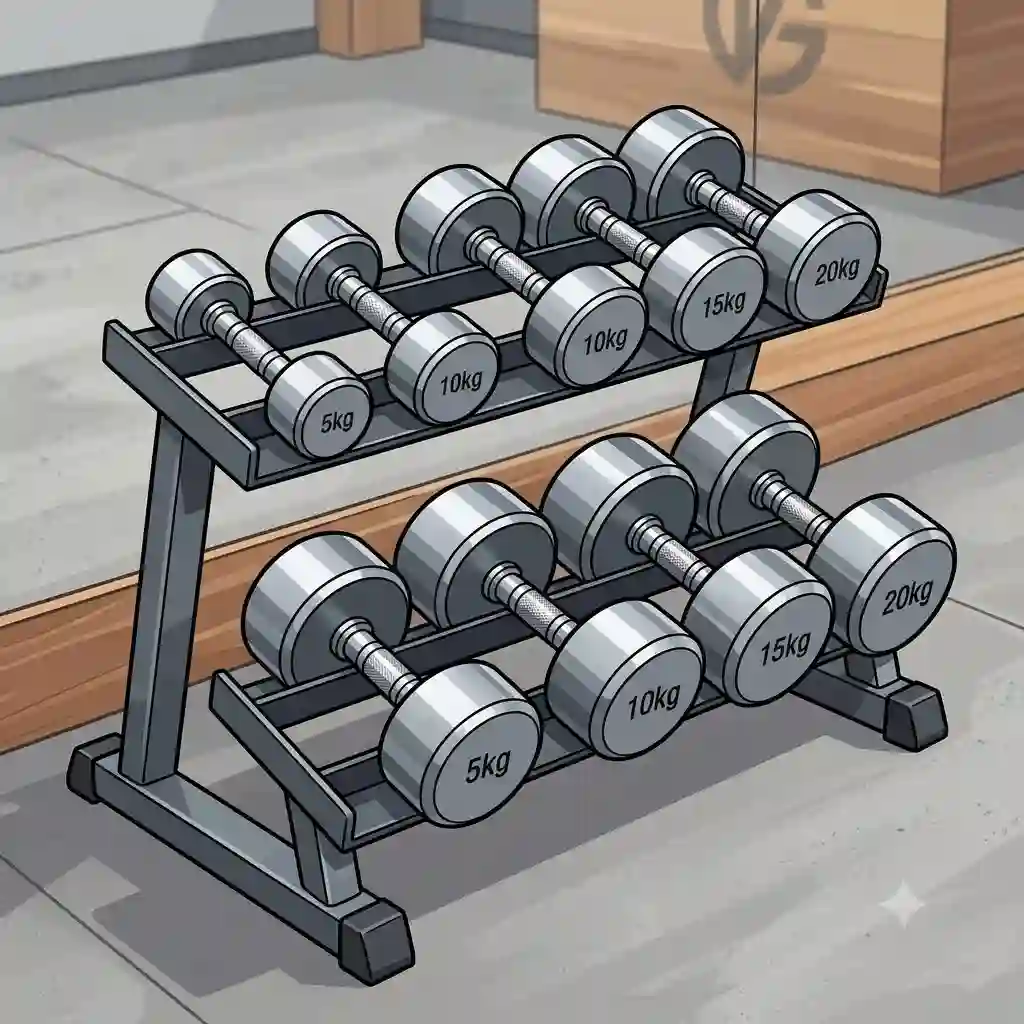
If you had walked into my training facility five years ago, you would have seen a graveyard of cracked plastic weight plates and peeling rubber hexes. It took replacing my third set of budget adjustable weights for me to finally understand what old-school powerlifters have known for decades: nothing beats the structural integrity of steel dumbbells.
What are steel dumbbells?
At their core, steel dumbbells are free weights constructed primarily from machined or cast steel alloys, offering a significantly higher density than concrete-filled plastic or cheap cast iron. This higher density means the physical footprint of the weight is smaller, allowing for better range of motion during chest presses and rows. Unlike their synthetic counterparts, premium steel models typically feature fully welded heads and precision-machined knurling.
In my 10+ years outfitting commercial and garage gyms, I’ve found that the market is flooded with deceptive marketing. Brands will slap the word “steel” on a product that is merely cast iron coated in cheap thermoplastic polyurethane (TPU). True steel variants offer superior tensile strength, meaning they won’t snap at the handle joint when you drop them from waist height after a grueling set of heavy shrugs.
But not all of these weights are created equal. The knurl pitch (the aggressiveness of the grip), the handle diameter, and the specific urethane or rubber coating over the steel head all dictate whether a dumbbell will last a lifetime or become an expensive doorstop. Let’s strip away the marketing hype and look at the actual performance metrics of the best options available in 2026.
Quick Comparison Table: Top Contenders in the Lab
| Product | Handle Knurling | Head Coating | Max Weight (lbs) | Best For | Price Range |
| PowerBlock Elite EXP | Straight, medium pitch | Bare steel plates | 50 (expands to 90) | Space-saving garage gyms | $300 – $450 |
| Ironmaster Quick-Lock | Straight, aggressive | Bare machined steel | 75 (expands to 165) | Heavy lifters / drop safety | $600 – $750 |
| Rogue Urethane | Straight, 31mm medium | CPU Urethane | 5 to 150 (fixed) | Commercial-grade durability | $100 – $350 (per pair) |
| Titan Fitness Urethane | Straight, 32mm aggressive | Urethane over steel | 5 to 120 (fixed) | Premium feel on a budget | $80 – $250 (per pair) |
| CAP Barbell Commercial | Ergonomic, mild | Urethane/Rubber mix | 5 to 120 (fixed) | Beginners and home studios | $50 – $200 (per pair) |
Looking at the comparison above, the Ironmaster Quick-Lock delivers the absolute highest weight capacity and drop-survivability, making it the superior choice for heavy lifters, though the load-time is slower. If fast weight changes are your priority, the PowerBlock Elite EXP justifies its unique cage design. Budget buyers should note that the CAP Barbell Commercial sacrifices high-end urethane durability for a more accessible price point, which is perfectly fine for low-impact home use.
💬 Just one click — help others make better buying decisions too! 😊
[addtoany]
Top 5 steel dumbbells on the Market — Expert Analysis
1. PowerBlock Elite EXP Adjustable Dumbbells
The PowerBlock Elite EXP utilizes a unique nested weight stack system made entirely of welded solid steel weight plates.
Most adjustables use plastic dials, but PowerBlock relies on a magnetic polypropylene selector pin. In my field tests, this means you can actually drop these weights from a moderate height without shattering internal gears—a common death sentence for dial-based competitors. The base model goes to 50 lbs, but the expansion kits allow you to push it to 75 lbs and eventually 90 lbs. The handle features two 2.5 lb adder weights, meaning you can adjust in micro-increments. What surprised me most during use was the “cage” design; while it looks restrictive, it actually forces proper wrist alignment during heavy presses.
In my experience, this is the definitive choice for the garage gym owner who is tight on space but refuses to compromise on weight capacity. If you live in an apartment or have limited square footage, the vertical footprint of this steel-plated beast is unbeatable.
Customer feedback consistently highlights the bulletproof reliability of the selector pin, though some users with exceptionally large hands report that the side rails occasionally rub against their wrists during bicep curls.
-
Pros: Expandable up to 90 lbs; zero fragile internal gears; incredibly compact footprint.
-
Cons: Cage design takes getting used to; changing the 2.5 lb adder weights is slightly tedious.
-
Price Range & Verdict: In the $300-$450 range (base set), it offers the highest return on investment for space-conscious lifters.

2. Ironmaster Quick-Lock Adjustable Dumbbells
The Ironmaster Quick-Lock system relies on heavy-duty, machined square steel plates and a solid steel handle with a proprietary locking screw.
The spec sheet says “zero rattle,” and for once, the marketing is perfectly accurate. Because you manually spin the locking screw into the threaded handle, the plates compress tightly together. This means the weights feel exactly like fixed commercial dumbbells. The aggressive knurling on the 1.25-inch thick handle provides exceptional grip security, even when your hands are slick with sweat during heavy rows. The square shape of the steel plates prevents them from rolling across uneven garage floors, a safety feature that cannot be overstated.
I recommend this setup exclusively for the traditional barbell lifter who wants to transition to dumbbells without losing the “iron feel.” If your current adjustable set feels loose or clanky, the Ironmaster will be a revelation. What most buyers overlook is the safety aspect: because there are no plastic parts, you can bail out of a heavy chest press and drop these directly onto rubber mats without fear of catastrophic breakage.
Reviews frequently praise the drop-survivability and the traditional feel, though the main critique is always the time it takes to change weights compared to dial-system competitors.
-
Pros: Virtually indestructible solid steel build; feels exactly like a fixed dumbbell; safe to drop.
-
Cons: Slower weight changes (takes about 15-20 seconds); square plates can feel bulky on the chest before a press.
-
Price Range & Verdict: Sitting in the $600-$750 range, this is a lifetime purchase that will likely outlive the person buying it.
3. Rogue Urethane Dumbbells
The Rogue Urethane Dumbbells feature solid steel heads that are fully welded to a 31mm straight handle, all encased in premium CPU (Cast Polyurethane).
The 31mm handle with Rogue’s proprietary knurling is the standout feature here. Unlike cheaper brands that use thick chrome plating (which fills in and dulls the knurl), Rogue leaves enough bite in the steel to ensure a locked-in grip. The CPU urethane coating is crucial—it has a higher durometer (hardness) rating than standard rubber, meaning it won’t degrade, smell, or leave black scuff marks on your floor. The solid steel head construction means there is no bolt to loosen over time; the head and handle are effectively one solid piece of metal.
This is the gold standard for commercial facilities and luxury home gyms. If you are tired of the overwhelming rubber smell of cheap hex dumbbells off-gassing in your basement, upgrading to CPU-coated steel is your solution. In practice, I found the straight handle much better for heavy pulling movements than the ergonomic (bulged) handles found on cheaper sets, as it distributes the load evenly across the entire palm.
Buyers rave about the complete lack of odor and the perfection of the knurling, though many note that building a full set requires a massive financial commitment.
-
Pros: Commercial-grade CPU coating; perfect 31mm knurled handle; zero off-gassing odor.
-
Cons: Extremely expensive to build a full set; takes up massive amounts of rack space.
-
Price Range & Verdict: At $100-$350 per pair depending on weight, these are high-ticket luxury items for serious purists.
4. Titan Fitness Premium Urethane Dumbbells
The Titan Fitness Premium Urethane Dumbbells mimic commercial designs, offering a 32mm straight handle pressed and welded into solid steel heads.
Titan has aggressively targeted the gap between budget and premium. The 32mm handle is slightly thicker than Rogue’s, which I found reduces grip fatigue during high-rep isolation work. The heads are true steel—not cast iron—which limits the overall size of the dumbbell. This is incredibly important for heavy chest presses; larger iron heads will clank together at the top of the movement, reducing your range of motion. The urethane coating here is slightly softer than commercial CPU, meaning it shows scuffs a bit faster, but it still outperforms basic rubber.
I typically point budget-conscious home gym owners toward these when they want a premium fixed-weight feel without the commercial price tag. What the spec sheet won’t tell you is that the knurling on Titan’s batches can be slightly inconsistent—some handles are very aggressive, while others are milder. However, for the price-to-performance ratio, they are exceptionally reliable.
Customer feedback indicates great satisfaction with the compact size and solid feel, though some reviewers mention minor cosmetic blemishes straight out of the box.
-
Pros: Solid steel core allows for a very compact head; excellent 32mm grip; high-end look.
-
Cons: Inconsistent knurling depth across different weights; minor cosmetic flaws upon delivery.
-
Price Range & Verdict: Generally found in the $80-$250 per pair range, offering 90% of commercial quality at 70% of the price.
5. CAP Barbell Commercial Urethane Dumbbells
The CAP Barbell Commercial weights feature solid steel heads protected by a urethane/rubber composite, utilizing an ergonomically shaped handle.
The primary feature here is the contoured handle. Instead of a straight shaft, the grip bulges in the middle to conform to the natural arch of your palm. While powerlifters often hate this, fitness enthusiasts doing high-rep hypertrophy work often find it reduces hand cramping. The heads utilize a steel core, ensuring the dumbbell remains relatively compact, though the outer coating is a hybrid material that lacks the extreme durability of pure CPU urethane.
This model is ideal for the casual lifter, beginners, or anyone doing P90X/peloton-style workouts in their living room. If your main goal is toning and general fitness, you simply don’t need the bulletproof specs of an Ironmaster. The contoured grip is forgiving on uncalloused hands, making it highly accessible. However, I’d strongly advise against dropping these from overhead, as the handle weld is not as robust as premium competitors.
Reviews are generally highly positive from casual users who love the grip comfort, but heavier lifters occasionally complain about the handle thickness at the center bulge.
-
Pros: Comfortable ergonomic handle; highly affordable; compact steel head design.
-
Cons: Coating is prone to scuffing; handle weld cannot withstand aggressive dropping.
-
Price Range & Verdict: Ranging from $50-$200 per pair, they are the undeniable champions of entry-level home fitness.
✨ Don’t Miss These Exclusive Deals!
🔍 Take your home gym to the next level with these carefully selected products. Click on any highlighted item to check current pricing and availability. These tools will help you create authentic strength and muscle gains your family will love!
The First 30 Days: Setup, Break-in, and Rust Prevention (Usage Guide)
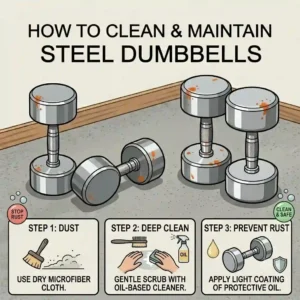
Buying premium equipment is only half the battle; maintaining it is where most home gym owners fail. The specific maintenance required for steel dumbbells depends entirely on whether the handle is bare steel, zinc-plated, or hard chrome.
The Oil Reset
If you purchased a bare steel or zinc-plated model (like the Ironmaster), your first task upon unboxing is the “oil reset.” Manufacturers coat raw steel in shipping grease to prevent oxidation during transit. Use a rag and a mild degreaser to strip this sticky residue off. Once clean, immediately apply a light coat of 3-in-One oil using a stiff nylon bristle brush. This forces the protective oil deep into the valleys of the knurling without pooling.
Avoiding the Biofilm Trap
What most buyers don’t realize is that human sweat is highly acidic. If you use your steel dumbbells daily and never wipe them down, dead skin cells, chalk, and sweat create a biofilm inside the knurl. Within 30 days, this can lead to surface rust. My strict rule in the lab: keep a microfiber towel and a spray bottle of diluted Simple Green (or any non-corrosive cleaner) in your gym. A quick mist and wipe after your workout takes 15 seconds but extends the life of the handle by decades.
Storage Optimization
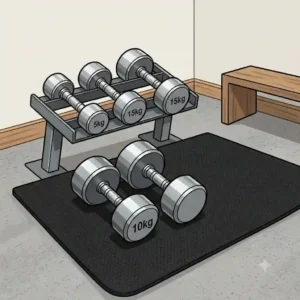
Never store bare metal weights directly on a concrete floor. Concrete naturally wicks moisture from the ground, creating a micro-climate of high humidity directly underneath the dumbbell. Always use a dedicated storage rack with plastic or rubber saddles. If you must leave them on the floor, ensure they are resting on high-density horse stall mats or vulcanized rubber tiles.
Case Studies: Matching the Dumbbell to the Lifter
For every product, there is an ideal user, and just as importantly, a scenario where that same top-rated product is actually a terrible fit. Let’s look at three distinct user profiles.
Profile 1: The Manhattan Apartment Commuter
-
Needs: Quiet operation, zero footprint, floor protection.
-
The Match: The PowerBlock Elite EXP. Because apartment floors are notoriously thin, the flat bottoms of the PowerBlock ensure they won’t roll. Furthermore, the selector pin is nearly silent.
-
The Anti-Recommendation: Fixed bare-iron dumbbells. Dropping fixed iron in an apartment is a guaranteed noise complaint, and buying a full 5-50lb rack would consume half a living room.
Profile 2: The Garage Powerlifter
-
Needs: Drop safety, aggressive knurling, high weight capacity.
-
The Match: The Ironmaster Quick-Lock. Powerlifters need the tactile feedback of deep knurling. When pushing to failure on an 80lb incline press, you need the confidence to drop the weight without shattering plastic gears.
-
The Anti-Recommendation: Any dial-based adjustable dumbbell. Dial mechanisms are fragile. One failed rep dropped from chest height onto concrete will permanently destroy a $400 set of dial adjustables.
Profile 3: The High-Intensity Interval (HIIT) Enthusiast
-
Needs: Rapid weight transitions, comfortable grip, sweat resistance.
-
The Match: A light set of CAP Barbell Commercial Urethane Dumbbells. The ergonomic grip prevents hand fatigue during fast-paced circuits, and the fixed weights mean zero transition time between exercises.
-
The Anti-Recommendation: Ironmaster Quick-Locks. Taking 20 seconds to unscrew a locking pin completely ruins the cardiovascular momentum of a HIIT workout.
Urethane-Coated Steel vs. Bare Iron: Which Wins?
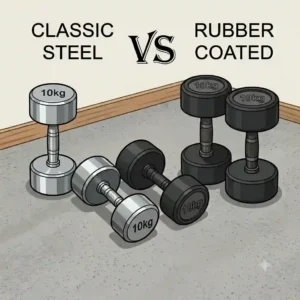
One of the most persistent debates in the strength community is whether to invest in modern urethane-coated steel or stick to traditional, uncovered cast iron hexes. Both have distinct biomechanical and financial implications.
Urethane is a synthetic elastomer, and premium brands use Cast Polyurethane (CPU). This material has an incredible resistance to tearing and abrasion. The primary benefit of a CPU-coated steel head is structural protection. When metal strikes metal (or concrete), the shockwave travels through the joint where the handle meets the head. Urethane acts as a shock absorber, dramatically reducing the sheer force on the handle weld. According to engineering principles from the National Institutes of Health regarding repetitive material stress, dampening impact directly increases the lifespan of metal alloys. Furthermore, urethane doesn’t off-gas; it is completely odorless.
Conversely, bare iron is pure, unapologetic metal. It chips. It rusts. It requires maintenance. However, bare iron has zero coating thickness, making the dumbbell physically smaller. A 100lb bare iron dumbbell will allow for a slightly deeper stretch at the bottom of a chest fly compared to a heavily coated 100lb urethane dumbbell.
In my view, unless you are running an old-school, hardcore barbell club where the aesthetic of rusted metal is part of the charm, urethane-coated steel dumbbells are superior for 95% of home gym owners. They protect your floors, eliminate odor, and maintain their resale value significantly better over a 5-year span.
How to Choose steel dumbbells for a Garage Gym
Building out a garage gym requires filtering out marketing hype and focusing on the metrics that actually matter. Here is my definitive framework for making your decision:
-
Assess Your Rack Space: If you have less than 100 square feet of usable space, do not buy fixed dumbbells. A rack of 5-50lb fixed weights takes up roughly 4 feet of horizontal space. Adjustable sets require only a 2×2 foot pedestal.
-
Evaluate Your Training Style: Are you doing explosive movements (snatches, heavy rows to failure) where dropping the weight is inevitable? If yes, you must select solid steel heads with welded handles or heavy-duty plates like the Ironmaster. Avoid anything with plastic housing.
-
Inspect the Knurl Pitch: Look closely at the handle. “Passive” knurling looks like tiny flattened diamonds; it won’t tear your hands, but it slips when wet. “Aggressive” knurling looks like tiny sharp peaks; it guarantees grip security but requires building calluses. For heavy garage lifting, aggressive knurl is mandatory.
-
Verify the Handle Construction: Is the handle straight or contoured? As a rule of thumb, straight handles are superior for pushing and pulling heavy loads because the pressure is dispersed evenly. Contoured handles force the pressure onto the center of the palm, which can cause nerve fatigue under loads over 60 lbs.
-
Check the Fastening Method: Avoid dumbbells where the head is attached to the handle with an external hex bolt. These will inevitably loosen, creating a dangerous “rattle” during overhead movements. Always opt for fully welded construction or press-fit designs.

The Hidden Costs of Adjustable vs. Fixed Steel
When assessing the Total Cost of Ownership (TCO) for gym equipment, the purchase price is merely the entry fee. The “Efficiency Gap” between fixed and adjustable steel dumbbells is where the true financial narrative unfolds.
At face value, adjustable sets are overwhelmingly cheaper. A high-end 5-80lb adjustable set might cost around $700. A comparable set of fixed commercial urethane dumbbells from 5 to 80 lbs will easily exceed $3,000 when factoring in shipping and the necessary storage racks.
However, the hidden cost of adjustables is time and biomechanical compromise. Over the course of a year, if you perform 5 workouts a week with 4 exercises requiring weight changes, the 15 seconds spent adjusting dials or pins adds up to hours of lost training time. Furthermore, adjustable models are physically longer. A 10lb setting on an adjustable dumbbell uses the exact same handle length as the 80lb setting. This awkward length makes isolation exercises—like seated bicep curls or lateral raises—feel incredibly clumsy.
With fixed steel dumbbells, the handle length is proportionate to the weight. A 10lb fixed weight is tiny and maneuverable. The long-term value of fixed weights lies in zero maintenance, perfect biomechanics, and instant drop-set capabilities. If budget allows, building a fixed set slowly over time yields a vastly superior training experience.
Biomechanics and Knurling: What Your Hands Actually Need
Most consumers fundamentally misunderstand handle design. The handle is the interface between the human nervous system and the weight; if the interface is flawed, muscle recruitment suffers.
Let’s discuss handle diameter. Industry standard handles range from 25mm to 35mm. A thinner handle (25-28mm) allows the fingers to wrap completely around and lock over the thumb (the hook grip). This is excellent for pull-oriented movements like heavy rows, as it reduces forearm fatigue. However, during pushing movements like bench press, a thin handle concentrates the load onto a very narrow strip of the palm, increasing the risk of carpal tunnel compression.
A thicker handle (32-35mm) distributes the compressive load over a wider surface area of the hand, making presses significantly more comfortable. The trade-off is that thick handles demand brutal forearm strength during pulling exercises. This is why premium brands often settle on a 30-31mm “Goldilocks” diameter.
Then there is the knurling. During my testing, I noticed that cheap imported brands use hard chrome plating over their steel handles. Hard chrome is highly resistant to rust, but it fills in the valleys of the knurling, making the grip dangerously slick. Raw steel, stainless steel, or zinc-plated handles retain the sharp bite of the knurl. If you train in an un-air-conditioned garage where sweat is a major factor, prioritizing raw or stainless steel handle finishes over chrome is a matter of safety, not just preference.
✨ Don’t Miss These Exclusive Deals!
🔍 Ready to build your ultimate strength sanctuary? Click on any highlighted item to check current pricing and availability. Make the investment in true steel today and feel the difference in every rep!
Conclusion
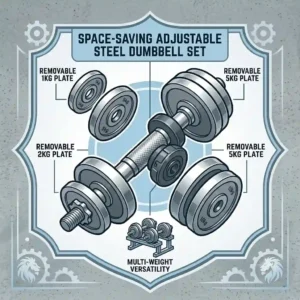
The transition from cheap, sand-filled plastic weights to authentic steel dumbbells is a rite of passage for any serious lifter. The density, the tactile feedback of precisely machined knurling, and the sheer durability of steel completely transform the home training experience.
Through my years of testing, it’s clear that there is no universal “best” product. The PowerBlock Elite EXP dominates for the space-constrained apartment dweller, while the indestructible Ironmaster Quick-Lock serves the hardcore garage powerlifter. If you have the budget, investing in premium fixed urethane options like the Rogue Urethane or Titan Fitness Premium will yield a commercial-grade sanctuary in your own home. Remember to analyze your specific training style, evaluate your available space, and don’t underestimate the importance of a good grip. Quality steel isn’t just an expense; it’s an investment in decades of uninterrupted progress.
FAQs
❓ Are steel dumbbells better than cast iron?
✅ Yes. Steel is significantly denser and has a higher tensile strength than standard cast iron. This means steel dumbbells are more compact, less prone to chipping or snapping at the handle, and offer a more balanced, professional feel during lifts…
❓ Do adjustable steel dumbbells break easily?
✅ It depends entirely on the internal mechanism. Models relying on plastic dials or gears will break if dropped. However, systems using solid steel pins or threaded locking screws (like Ironmaster) are virtually indestructible and can withstand heavy garage gym use…
❓ What is the best way to clean a knurled dumbbell handle?
✅ Spray a stiff nylon bristle brush with a mild, non-corrosive degreaser or diluted Simple Green. Scrub the handle to remove chalk, sweat, and dead skin cells. Wipe dry immediately with a microfiber towel. Apply 3-in-One oil monthly to prevent rust on bare steel…
❓ Why are urethane dumbbells so expensive?
✅ Urethane (specifically CPU) is an extremely durable synthetic elastomer that is costly to manufacture. Unlike cheap rubber, it does not degrade, crack, or emit chemical odors over time. You are paying for a lifetime coating that protects both the steel and your floors…
❓ What handle diameter is best for dumbbells?
✅ For general strength training, a straight 30mm to 32mm handle is optimal. It provides enough surface area to comfortably distribute heavy pressing loads across the palm, while remaining thin enough to maintain a secure, locked grip during heavy pulling movements…
Recommended for You
- 5 Best dumbbells 80 lbs for Unstoppable Muscle Growth (2026 Guide)
- 80 lb Dumbbells Guide: 5 Best Heavyweight Options for 2026
- The Best one pound dumbbells for Toning & Rehab (2026 Guide)
Disclaimer: This article contains affiliate links. As an Amazon Associate, I earn from qualifying purchases. If you purchase products through these links, we may earn a small commission at no additional cost to you.
✨ Found this helpful? Share it with your friends! 💬🤗
[addtoany]
